
How to Use Lemon Vibrators When Sensation Feels Numb During Partnered Sex
Let's be real: you're having sex with someone you care about, and nothing is registering. Not pain, not pleasure. Just a kind of pleasant blankness, like your body showed up but your nervous system stayed home. You're doing everything right. They're doing everything right. But the wire between physical touch and actual sensation feels disconnected.
That numbness isn't a personal failure. It's a nervous system doing exactly what it's designed to do. And once you understand why, fixing it becomes almost simple.
Why your body goes numb during partnered sex
There are three main reasons sensation disappears during partnered intimacy, and they rarely have to do with your partner or their technique.
First: performance anxiety. Your brain is running a background script. Am I taking too long? Do they think I'm too sensitive? What if I can't come? What if they think I don't want them? When your prefrontal cortex is busy narrating instead of experiencing, your nervous system dims the sensory signal. It's a protective reflex. Your body is saying, "I can't feel pleasure safely right now because I'm too busy watching myself."
Second: dissociation as a learned pattern. Some people develop numbness as a survival mechanism earlier in life. If sex has ever felt unsafe or uncomfortable, your nervous system learned to check out. That response doesn't disappear once you're in a healthy relationship. You have to actively teach your body it's safe to feel again.
Third: attention fragmentation. You're thinking about work, your body image, whether the door is locked, what you look like from this angle, or whether you're doing it "right." Pleasure requires presence. When your attention is split twelve different ways, there's no bandwidth left for sensation.
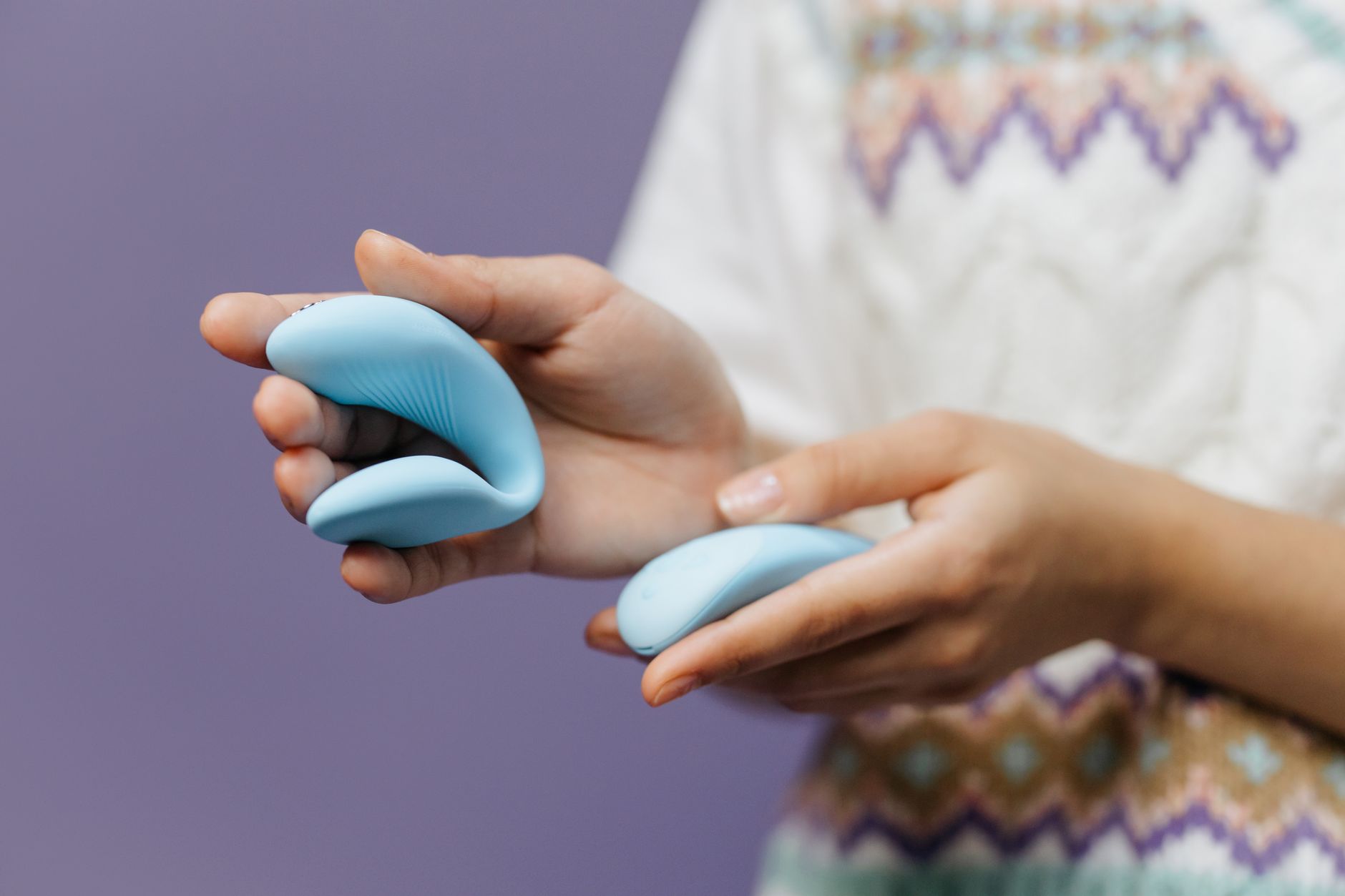
Photo by cottonbro studio on Pexels
How numbness affects partnered pleasure specifically
When you're alone with a lemon vibrator, numbness feels like a simple problem: turn up the intensity, adjust the pattern, try a different angle. But partnered sex adds layers. You're managing someone else's pleasure, energy, pace, and presence at the same time you're trying to feel something.
Most people blame themselves. "I'm broken." "My body doesn't work like it used to." "I don't want them enough." All of that is backward. Numbness during partnered sex often means your nervous system is protecting you from something. Vulnerability, maybe. Letting someone see you have needs. The risk of disappointment.
When that's the root cause, a partner trying harder, going slower, or buying more lubrication won't fix it. You need to rewire what your body believes about feeling in front of another person.
Using a lemon vibrator as a reset during partnered sex
This is where lemon clitoral vibrators change the game. Introducing a vibrator into partnered sex isn't about "not being enough" on either side. It's a tool that does something you can't do alone together: it interrupts the numbness feedback loop.
Here's how it works. A lemon vibrator provides consistent, precise stimulation that your nervous system recognizes instantly. Within seconds, sensation floods back. The vibration pattern bypasses the mental chatter and reaches the clitoral nerves directly. Your body remembers what pleasure feels like.
Then something shifts. Once sensation is back online, you're no longer in performance mode. You're not watching yourself. You're in your body instead of above it. And your partner gets to witness that shift. That presence is the actual intimacy.
The setup that works best:
Start with the vibrator on a lower pattern (typically 1-3 on most devices, including the Lem). Let your partner know what you're doing and why. "I want to feel this more fully with you. This helps me get there." That's the entire conversation. No apologies, no shame.
Have your partner continue what they're doing while you use the vibrator on yourself. Some people think that means they should stop moving. They shouldn't. The combination of their touch plus the vibrator is what rewires the nervous system. Your body is learning: "I can feel my partner AND feel pleasure at the same time. These things go together."
Start with 3-5 minutes. Your job isn't to come. Your job is to feel. If an orgasm happens, great. If sensation returns and nothing else does, that's the win you're after.
The mental part: teaching your body it's safe
Physical stimulation only gets you halfway there. The other half is your nervous system believing that feeling pleasure in front of your partner is actually safe.
Three things help with that:
Make it normal, not special. Don't treat the vibrator like a last resort when something isn't working. Bring it in the same way you'd bring lube or pillows. Neutral, matter-of-fact, part of the toolkit.
Tell your partner what you need them to do. Don't leave them to guess. "I like it when you keep moving" or "I like it when you watch me" or "I like it when you stay still and just hold me." Your body will feel safer with clear directions. Your partner gets to feel helpful instead of confused.
Pay attention to sensation in small increments. After you feel the vibration, notice three things: the temperature of your partner's skin, the rhythm of their breathing, their expression. You're anchoring back into the present and into the connection. That's what rewires the dissociation.
When sensation numbness is deeper than techniques
If this pattern shows up with every partner, or if it's getting worse despite using a lemon vibrator, there might be something bigger going on. Trauma, anxiety, depression, hormonal shifts, or medication side effects can all numb sensation in ways that technique alone won't fix.
A therapist who specializes in sex and relationships can help you understand whether this is a nervous system pattern or something medical. How to Use Lemon Vibrators When You Feel Anxious About Solo Pleasure covers some of that territory too. If anxiety is part of the picture, that resource walks through nervous system regulation first.
The role of consistency and patience
Your nervous system didn't learn numbness overnight. It won't unlearn it overnight either. If you use a lemon vibrator once and sensation still feels distant, that doesn't mean it's not working. You're building new neural pathways. That takes repetition.
After 4-6 sessions over a few weeks, most people notice sensation coming back faster and staying longer. Your body is learning that feeling pleasure during partnered sex is something it can do safely.
The pleasure itself will probably feel different than it did before. That's not a step backward. That's your body recalibrating to what actually feels good now, instead of what you thought should feel good.
What changes when sensation comes back
When numbness clears, most people report three things. First, sex feels less like a performance and more like a conversation. You're responding instead of executing. Second, your partner feels the shift. When you're truly present, they can feel that. Third, orgasms become optional instead of mandatory. Pleasure stops being about the destination and starts being about the fact that you're feeling at all.
None of that requires a perfect body, the right position, or a partner who says exactly the right thing. It just requires a nervous system that believes it's safe to feel.
Frequently asked questions
Why does numbness happen even when I'm aroused?
Arousal and sensation are two different systems. You can be physically aroused (lubricated, heart rate up, blood flowing) while your clitoral nerves are essentially offline. That's why your partner can do all the right things and you still feel nothing. Arousal without sensation is like the engine running but the stereo off. A lemon vibrator turns the sensory signal back on, which often jump-starts the connection between arousal and feeling.
Can a vibrator make numbness worse if I use it too much?
Your clitoral nerve endings won't desensitize from a vibrator the way your skin desensitizes to pressure. What can happen is your nervous system gets used to a particular pattern or intensity and stops responding. That's why varying patterns, taking breaks between sessions, and trying different intensities matters. Think of it like listening to the same song on repeat. It's not that your ears break. You just need to switch it up to feel engaged again.
Is it normal to need a vibrator to feel something during partnered sex?
Absolutely. Clitoral vibrators were literally invented because partnered sex alone doesn't provide the kind of stimulation that most bodies need to feel sensation fully. You're not broken or asking for too much. You're working with how human bodies actually function, not how movies pretend they do. How to Use Lemon Vibrators When Your Partner Wants to Take the Lead goes deeper into partnered integration.
What if my partner feels insecure about me using a vibrator?
That's a relationship conversation, not a vibrator problem. What you're actually saying to your partner is, "Your presence matters, AND I also need this specific kind of stimulation." If they're hearing that as "you're not enough," that's about their insecurity, not your request. A good partner wants you to feel pleasure. If they don't, that's information about the relationship. Set the boundary: "I want to use this because I want to feel good with you. That's not a reflection on you."
Does using a vibrator during partnered sex mean I'm less attracted to my partner?
No. It means your nervous system needs a specific input to wake up. That's about your body's sensory thresholds, not your emotional connection. Some people need glasses to see clearly. That doesn't mean they're rejecting the view. The vibrator is just the tool that lets you actually experience what's already there.
How long does it take for numbness to go away?
It depends on the root cause. If it's performance anxiety, 3-4 sessions usually shift it significantly. If it's a deeper dissociation pattern, you might need 6-8 weeks of consistent practice plus some therapy work. If it's hormonal or medication-related, you might need a medical conversation first. The lemon vibrator gets sensation back fast, but the nervous system retraining takes a bit longer.
Numbness during partnered sex is one of the most isolating things that can happen. You're physically close to someone you care about, and you can't feel them. That gap between presence and sensation creates shame that keeps people from talking about it. But this is common, fixable, and worth addressing. A lemon clitoral vibrator isn't a shortcut. It's a reset button that teaches your nervous system what pleasure feels like again. And once your body remembers, everything else becomes possible.