Let's talk about what happens to desire when conflict moves in
Honestly, this is the part nobody wants to say out loud: after a big fight, after weeks of tension, after you and your partner have been circling each other like cautious strangers, desire doesn't just fade. It vanishes. It doesn't feel absent so much as impossible. Your body is not in the mood. Your nervous system is in protection mode.
That makes sense. Your brain is treating your partner as a threat (even if that threat was just harsh words and emotional distance). Sex requires vulnerability. Your body will not be vulnerable with someone it perceives as unsafe, even temporarily. Even if you know, logically, that things are okay again.
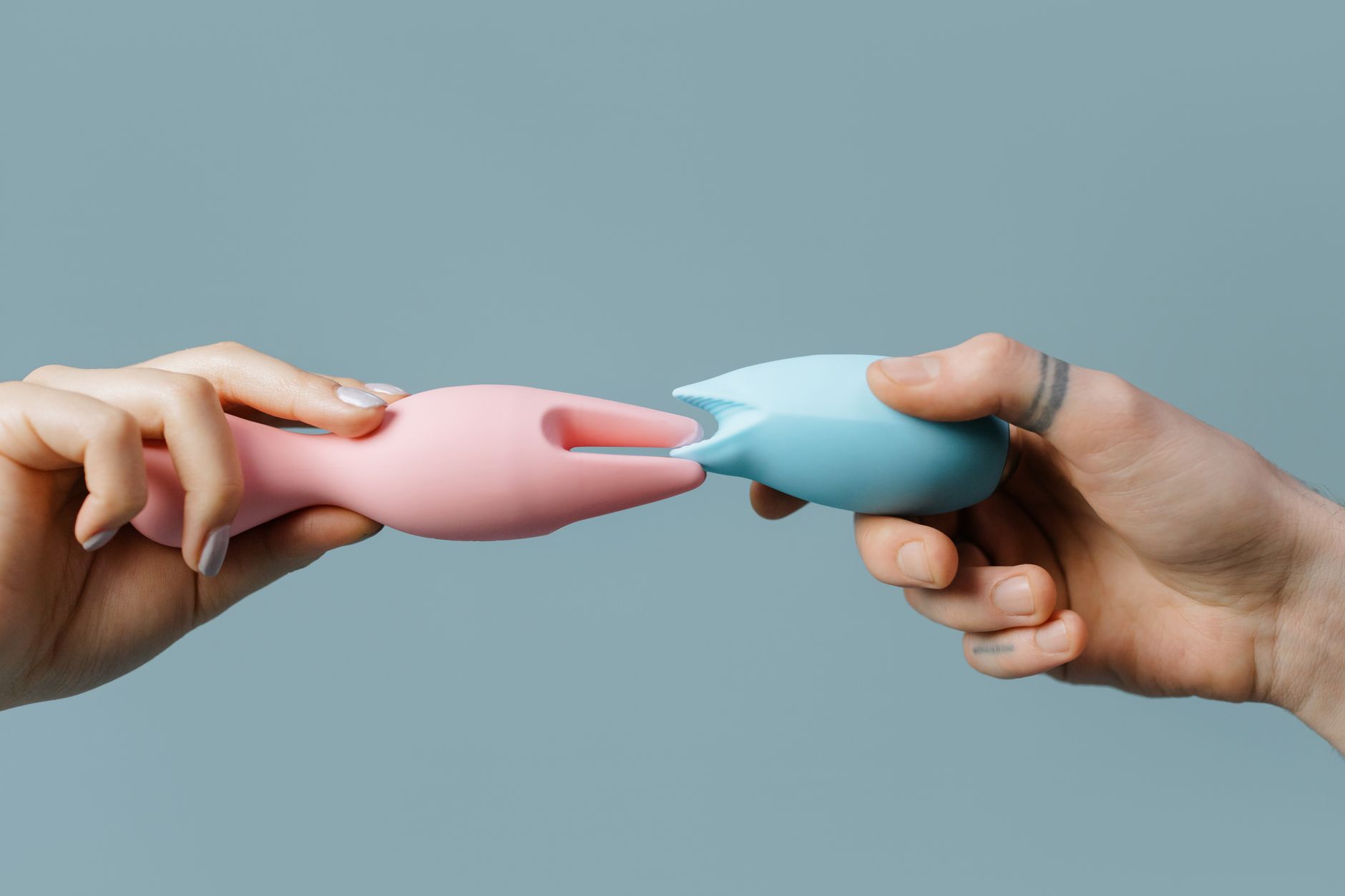
Here's where lemon vibrators and intentional solo pleasure come in. Not as a replacement for reconnection with your partner, but as the bridge that gets you back to your own body first.
Why solo pleasure matters more than you think after conflict
When you've been in conflict, especially longer-term tension, three things happen simultaneously. Your stress hormones are elevated. Your pelvic floor is probably tight (we hold tension everywhere during conflict, including there). And crucially, you've lost access to your own pleasure signals.
After conflict, many people report that masturbation feels pointless, or they can't orgasm, or touch just feels... static. No sensation. This isn't actually loss of capacity. This is your nervous system saying "we're not safe enough for pleasure yet."
Lemon clitoral vibrators cut through this in a way that solo touch often can't. The stimulation pattern from a lemon vibrator like The Lem bypasses some of that nervous system gatekeeping. It's mechanical, not emotional. It doesn't require you to feel safe with a person; it requires you to be willing to feel something at all.
The clinical term is "somatic recovery." The human term is: your body needs to remember it can feel good, independently, before it can feel safe being vulnerable with someone else again.
The framework: three phases of rebuilding pleasure
Phase one: Permission and isolation
After conflict, give yourself 5-7 days of solo time with lemon vibrators before you attempt partnered sex. This sounds counterintuitive (aren't you supposed to reconnect?) but what you're actually doing is recalibrating. You're telling your nervous system: pleasure is still possible, even when everything feels broken.
Start with low-intensity patterns. The Lem has settings one through seven. Spend time on patterns one and two, even if you find them too gentle in normal circumstances. You're not chasing orgasm here. You're building tolerance for sensation when you're in a heightened state.
Use lemon adult toys in a comfortable, private space where you won't be interrupted. No phone. No pressure to finish. Just 15-20 minutes of exploring what sensation still feels accessible to you. If nothing happens, that's not failure. You're training your nervous system that pleasure is on the table again.
Phase two: Reconnection to your own response
After three or four sessions of solo play, you'll likely notice pleasure building again. Not necessarily intense orgasms yet, but a return to baseline. That's when you can introduce variety. Try different patterns on the lemon vibrator. Notice which ones feel good and which ones feel irritating (both are data).
This is also when you might want to use lemon sexual toys as part of a broader self-care ritual. A bath, time alone, intentional time for yourself. You're rebuilding the message: your pleasure matters, separate from your relationship status.
Many people in my practice tell me this phase is weirdly stabilizing. Knowing you can still access your own pleasure, independent of the relationship dynamic, changes how you show up in conversations about reconnection.
Phase three: Reintroduction to partnered pleasure
Once you've spent a week or so rebuilding solo pleasure, you're in a better position to talk to your partner about what's next. This is important: do not jump to penetrative sex yet. The conversation should be about presence, not performance.
You might say something like: "I want to reconnect physically, but I need to go slow. I want us to spend time together without pressure to finish." That might look like partnered touching, kissing, or using a lemon vibrator together in a way that feels collaborative rather than goal-oriented.
Some couples find it helpful to have the partner use the lemon vibrator on them, slowly, as a form of active apology and attentiveness. Others prefer to use it solo while their partner is present, watching, reconnecting without the pressure of simultaneous performance.
There's no single script here. The point is: you're moving from "I feel unsafe" to "I feel seen," and lemon clitoral vibrators can be part of that journey if you're intentional about it.
Why the pattern matters: neurochemistry after conflict
When you're in conflict, your brain is bathing in cortisol (stress hormone) and you have less dopamine available (the motivation and pleasure chemical). Orgasm creates a flood of dopamine, oxytocin, and endorphins. But here's the tricky part: your nervous system won't let you access that without feeling relatively safe first.
Lemon vibrators are one of the few tools that can create enough mechanical stimulation to trigger pleasure response even when emotional safety is still rebuilding. You're essentially creating a short circuit in the nervous system: "Yes, I'm tense. Yes, I'm in conflict. But my body can still feel this sensation right now."
That doesn't fix the relationship issue. But it does reset your nervous system's baseline from "threat" back to something closer to "neutral." And from neutral, you can actually have the conversations that matter. From threat mode, you can't.

Photo by Madison Inouye on Pexels
What to actually tell your partner (if you want to)
You don't have to tell your partner you're using lemon vibrators during the rebuilding phase. That's entirely your choice. But if you want to, honesty can actually accelerate reconnection.
A script that works: "I've realized that I need some solo time to feel like myself again. I'm using time alone to reconnect with my own pleasure, and that's helping me feel more present with you." Most partners understand this. It's not a threat; it's actually rebuilding the foundation for better partnered sex.
If your partner feels threatened by solo play during this time, that's a separate conversation. But it's important: your pleasure, your body, your nervous system coming back online is not a betrayal. It's the prerequisite for being able to be intimate again.
For couples who want to use lemon vibrators together during rebuilding, start by introducing the toy slowly. Maybe one partner holds it, takes the lead, uses it as a tool of attention on their partner's body. This reframes the vibrator from "you need this without me" to "we're using this together."
Timeline: how long does this actually take
Small conflicts? Three to five days of solo play before partnered sex feels possible again.
Major breaches (infidelity, serious betrayal, prolonged emotional distance)? This framework needs weeks, maybe months, alongside couples therapy. Lemon vibrators are a tool, not a fix. If the relationship issue itself hasn't been addressed, pleasure will keep coming back as "doesn't feel right."
But the general pattern holds: solo pleasure first, reintroduction second, full partnered intimacy third. Rushing that order keeps you stuck in the nervous system dysregulation that conflict created.
The thing about rebuilding that nobody mentions
Once you've gone through this cycle once, you learn something valuable: pleasure is resilient. It doesn't disappear. It just goes dormant when you're threatened. That knowledge matters. It means future conflicts feel less catastrophic. You know that pleasure is coming back. You've felt it come back.
Lemon vibrators, in that sense, are not just tools for sex. They're evidence that your body can recover. That matters more than the orgasm itself.
People also ask
How soon after a major fight should I wait before using vibrators
Not immediately. Give yourself 24-48 hours first. That's enough time for your nervous system to get out of acute fight mode. Attempting pleasure while you're still in high-stress activation often feels weird or wrong. Wait until you feel at least slightly calmer, then start gently. How to Use Lemon Vibrators When Pleasure Feels Disconnected After Stress covers this dynamic in more detail.
Can I use a lemon vibrator if I'm not ready to forgive yet
Absolutely. You don't need to have resolved the conflict to use solo pleasure. In fact, solo pleasure can happen while you're still angry. Your body's capacity for sensation and your emotional processing are separate. One doesn't require the other.
Should I tell my partner I'm using lemon vibrators during conflict recovery
Only if you want to. If you think it will help them understand that you're working on reconnection, say so. If you think it will create more tension, privacy is fine. This is your body and your pleasure. You're not hiding something; you're managing your own nervous system.
What if my partner is the one who needs to rebuild pleasure after conflict
Then the same framework applies. If your partner is struggling to access desire after conflict, lemon adult toys or other vibrators can help them reconnect with their own body first. You can offer to give them space, time, and privacy to do that work. That's actually one of the most loving things you can do during rebuilding.
Is it normal that I feel more desire for solo play than for my partner right now
Completely normal. After conflict, solo pleasure often feels safer and more accessible than partnered intimacy. That doesn't mean your relationship is over; it means your nervous system is recalibrating. As you feel safer with your partner again (through conversations, repair, consistency), partnered desire returns. One doesn't replace the other; solo pleasure is the bridge.
How do I know when I'm ready to try partnered intimacy again
Three signs: (1) you can orgasm solo again without it feeling numb or pointless, (2) you can have a conversation with your partner without defensiveness, and (3) you feel actual desire to be close to them, not just duty or pressure. If all three are present, you're probably ready. If you're forcing it because you feel like you "should" be ready, wait longer.
Your pleasure is the signal. Trust it.