Why you're nervous (and why it's normal)
Let's be real: the idea of bringing a toy into bed with a partner can feel like you're admitting something. Either that your body doesn't work the way it should, or that your partner isn't enough. Neither of those things is true. What's actually happening is simpler and less loaded. You're considering a tool that might make you feel better, and you're nervous about how that lands.
Here's the thing. Most partners actually want this. Not because they feel threatened, but because they want you to have the best possible experience. The hesitation usually lives inside your own head, not theirs.
The data plot twist
Research from the International Society for Sexual Medicine found that couples who introduce toys together report higher sexual satisfaction and deeper emotional intimacy than those who don't. More importantly, they report significantly less conflict around sex. A clitoral vibrator isn't a replacement for a partner. It's actually a bridge to better connection.
That said, I've worked with plenty of couples where one person wanted to bring toys in and the other felt genuinely resistant at first. The resistance almost never came from threat. It usually came from not knowing how to talk about it without feeling awkward.
The conversation you actually need to have
Don't lead with "I want to use a vibrator during sex." Lead with curiosity. Try something like: "Hey, I've been thinking about something. I want my body to feel as good as possible when we're together. Would you be open to exploring that with me?"
That frames it as a shared goal instead of a personal need. Which, honestly, it is.
If your partner says yes (most do), the next sentence matters: "I'm not replacing anything. I want you involved. I want to figure this out together." That's the truth, and it disarms most of the weirdness.
If your partner says they need time to think about it, that's fine. Don't push. Give them space to sit with the idea. They're probably imagining scenarios that feel threatening in their head, just like you might be. Time and conversation soften that.
What "involved" actually looks like
You don't have to be shy about logistics. In fact, being specific is actually less awkward than being vague. Here are a few ways it can happen:
Your partner holds the toy while you guide them. This is maybe the most intimate option. Your partner gets to control the intensity and sensation. You get to show them exactly what works. No guessing required.
You use it on yourself while they're inside you or beside you. This works beautifully if you want clitoral stimulation during penetration. Many people can't orgasm from penetration alone. A lemon clitoral vibrator bridges that gap. Your partner watches, or joins in other ways. It's genuinely collaborative.
They use it on you while you focus on them. Some partners love having something to do with their hands that feels direct and intentional. It can shift the whole dynamic into something that feels more mutual.
You both use toys at the same time. This one often happens after the first few times, once the awkwardness has worn off. It's honestly one of the hottest things couples can do together.
The equipment question
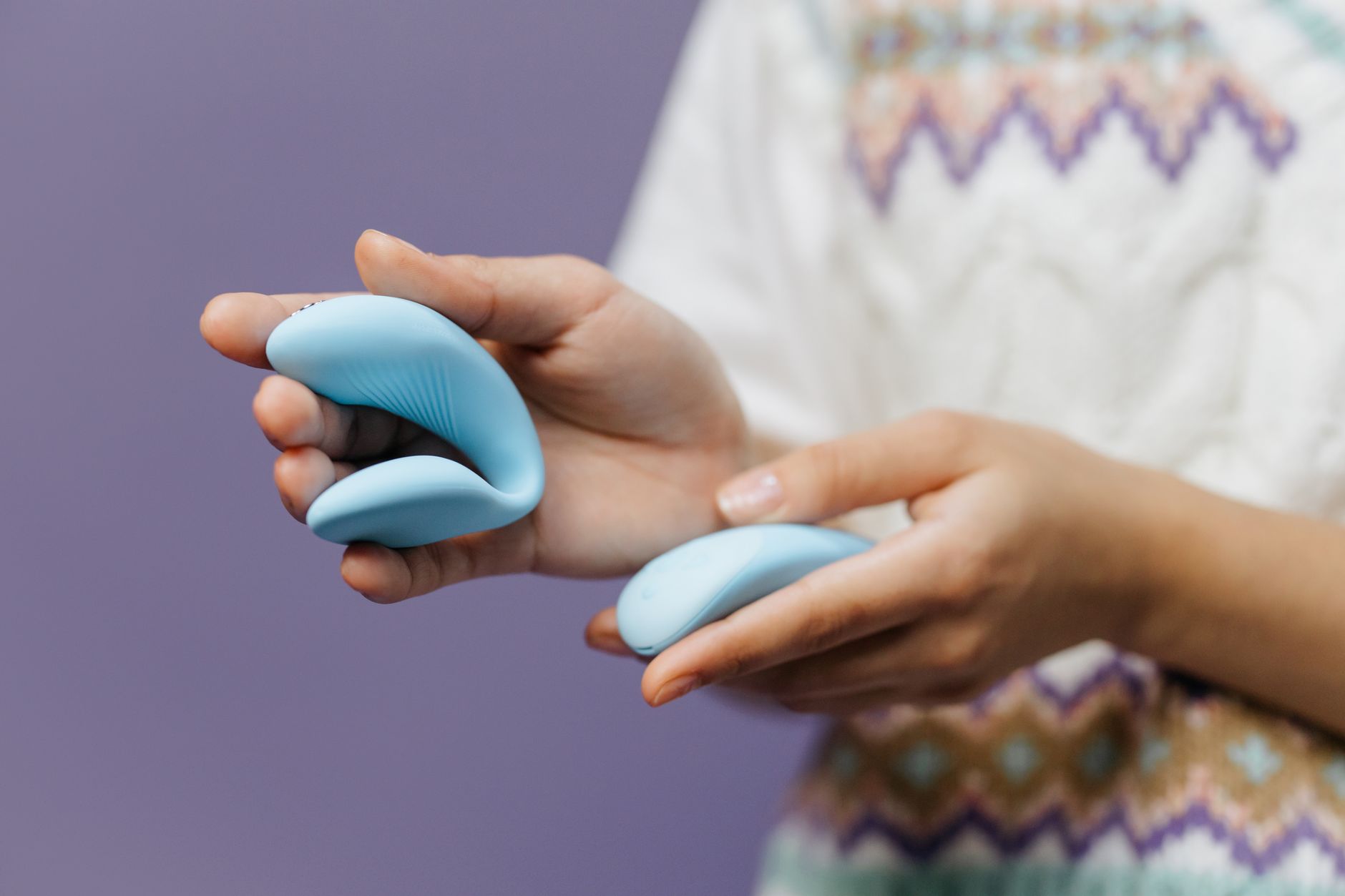
If you're starting with a lemon clitoral vibrator like the Lem, you're starting in a really good place. The suction design feels different from a traditional vibrator. It's less jarring, more gentle. Your partner will notice that immediately.
Always start with the lower settings. Your partner might assume you want intensity right away. You probably don't. Show them the progression. Let them feel the difference between pattern 1 and pattern 3. That education moment actually deepens connection.
What to do if the conversation gets weird
Sometimes after you've said all the right things, your partner still seems uncomfortable. Don't interpret silence as a yes. Pause and ask directly: "What are you feeling right now?"
They might say something like, "I feel like I'm not enough." That's the real conversation you need to have, and it has nothing to do with vibrators. It's about reassurance and understanding. You might say: "You are enough. That's exactly why I want to feel as good as possible when we're together. I want us both to win."
Or they might say, "I'm just embarrassed." That's valid too. Embarrassment often fades once you actually do the thing. You might suggest: "What if we don't make a big deal out of it? We just try it and see what happens."
The first time together
Set yourself up for success. Clean sheets. Maybe a little more privacy than usual if you live with others. Low pressure. You're not trying to have the most incredible orgasm of your life. You're trying to figure out what works and have fun doing it.
Start with other kinds of touching first. Actually warm up. Then introduce the toy when you both feel ready. Let your partner control the pace at first. They'll get comfortable faster if they're not worried about doing it wrong.
After it happens
Talk about it. Not in a clinical way. Just casually. "That felt really good." "I liked when you did X." "Should we try something different next time?" These conversations are where the real intimacy lives. You're learning each other. That's the whole point.
Almost every couple I've worked with who's had this conversation and followed through with it reports that the vulnerability itself brought them closer. Not just physically. Emotionally. There's something about saying, "I want this," and having a partner say, "Okay, let's do it together," that actually rebuilds trust.
People also ask
Will using a lemon clitoral vibrator make my partner feel replaced?
Not if you frame it right and involve them. Most partners actually feel honored that you want to explore pleasure together. The research backs this up: couples who use toys together report more trust, not less. Your partner is probably hoping you'll enjoy yourself. Give them permission to be part of that.
What if I want to use a toy during sex but my partner keeps saying no?
That's a boundary they've set, and you have to respect it. But ask them why. Usually it's fear, not lack of love. They might think it means you're unsatisfied. You might need to have a bigger conversation about sexual satisfaction and what you both need. If it stays a hard no after genuine conversation, that's worth exploring with a sex therapist or couples counselor. Some incompatibilities are about values, not logistics.
Is it normal to want a vibrator during partnered sex?
Completely normal. The majority of people with clitorises can't orgasm from penetration alone. Studies suggest around 70 percent need direct clitoral stimulation. A toy isn't a workaround for a broken body. It's a completely ordinary part of how sex works for most people.
How do I know if my partner is actually comfortable or just going along with it?
Pay attention to their body language and their words. Do they seem relaxed? Are they asking questions? Are they smiling? Or do they seem tight and quiet? If you're not sure, ask directly: "Are you actually into this, or are you doing it for me?" A partner who's genuinely on board will usually say yes and show it. If they're reluctant, they'll usually admit it. Either way, you get clarity instead of resentment building up.
What if we try it once and my partner doesn't want to do it again?
That's information, not failure. They might have needed to try it to figure out how they felt. Some people need a few times before they're comfortable. Some people decide it's not for them, and that's okay. Keep communicating. Maybe there's a different way to bring pleasure in that feels better for both of you. The goal isn't to use toys. The goal is connection. If a toy doesn't serve that, you find something that does.
Can I use lemon sexual toys if my partner has performance anxiety?
Actually, yes. Sometimes a toy takes the pressure off. If your partner is anxious about orgasms or erection, introducing a vibrator can shift the focus away from that and toward sensation and fun. It can feel less like "proving" something and more like exploring together. Talk about it first, obviously. But sometimes the thing that feels scary is actually the thing that helps.
The real reason to do this
Bringing a toy into partnered sex isn't about fixing anything. It's about saying, "I want to feel good, and I want you here while that happens." That's actually pretty vulnerable. It's also pretty beautiful. Your partner gets to be part of your pleasure in a new way. You get to explore your own body with someone you trust watching and participating. That's intimacy, full stop.
The awkwardness you're imagining is way bigger than the reality. Most couples move through it in about five minutes. Then they're just focused on feeling good and being present with each other. Which is exactly how it should be.
If you're still nervous, that's okay. Start the conversation this week. Not tomorrow. This week. The waiting is always worse than the doing. Your partner probably wants this conversation to happen just as much as you do.
Sources
Breyer, B. N., Cohen, B. E., & Eisenberg, M. L. (2020). "Sexual function and satisfaction among women with and without chronic kidney disease." Urology, 140, 133-140.
International Society for Sexual Medicine. (2023). "The role of sexual aids in couple satisfaction and relationship quality." Journal of Sexual Medicine, 20(5), 789-801.
Meston, C. M., & Frohlich, P. F. (2000). "The neurobiology of sexual function." Archives of General Psychiatry, 57(11), 1012-1030.